

Skip to content

Founding Assembly

IFIP Global Education Assembly

Many systems. One table. One global voice.

Following discussions with UNESCO, the IFIP is launching a new global body bringing together leaders of school associations and representative education organisations from around the world.

A collective voice for international education dialogue.

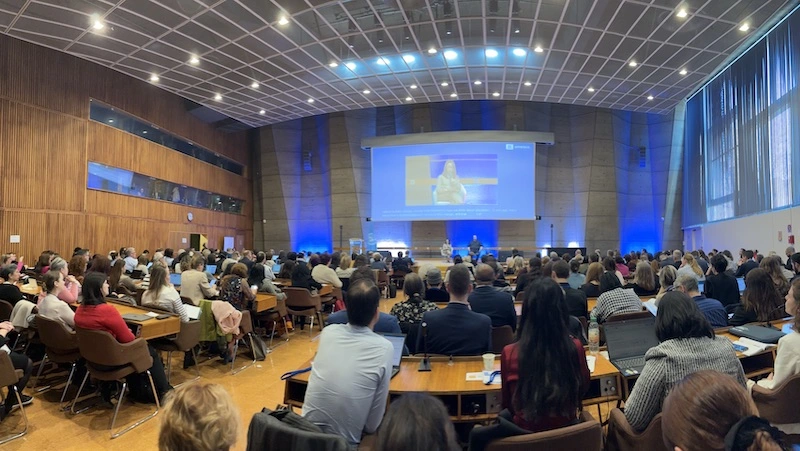
Founding Assembly engagement includes dialogue at UNESCO Headquarters, Paris
International education dialogue at UNESCO Headquarters

An Assembly of Associations

The Foremost Strategic Voice for School Systems Worldwide

UNESCO has identified a vital opportunity to strengthen the contribution of school systems within international discussions, inviting IFIP to help convene the process to establish this essential platform.

Through this initiative, the Assembly serves as the only truly global assembly for school associations in the world. While individual nations maintain their own domestic networks, this platform stands alone as the only mechanism that joins them together on a global scale, operating as the foremost representative body to deliver a collective voice to the highest levels of international policy influence.

At a glance

Founding leaders co-design the Assembly (purpose, principles, and structure), not a passive membership programme.

What

A global voice for school associations: one platform to speak together in international education.

Convenor

IFIP, at UNESCO's invitation, to close the gap in global school-association representation.

Founding cohort

~20 founding leaders, deliberately small for dialogue that counts.

Process

Online dialogue, then in person at UNESCO HQ, Paris.

Design

Co-created with founders: governance and outcomes not fixed in advance.

Representation

Diversity of systems welcomed; uniformity never required.

Launch target

Launch at UNESCO HQ, Paris, target March 2027 (Global Education Coalition Week).

Engage

Express interest. Founding places are selective, by invitation.

International cooperation has never been more important.

Education systems across the world are experiencing profound change: artificial intelligence, teacher shortages, inclusion, student wellbeing, workforce readiness, climate resilience, demographic change, migration, and digital transformation.

Many challenges facing education today are shared across countries and regions. Increasingly, solutions emerge from collaboration, shared learning, and collective problem-solving. The need for a stronger collective voice from school associations has never been greater.

The future of education will ultimately be shaped in schools. The Global Education Assembly exists to ensure that school associations help shape the future of education.

Why UNESCO and IFIP

Why UNESCO?

UNESCO serves as the United Nations specialised agency for education and remains one of the world's most important convening platforms for international educational cooperation. The Global Education Assembly seeks to complement this work by ensuring that organisations representing schools can contribute more effectively and help bridge the gap between policy and practice.

Why IFIP?

For many years, IFIP has worked to strengthen the connection between educational practice and international decision-making. Working across more than 140 countries, IFIP has championed the principle that those closest to implementation should have a meaningful voice in shaping the future of education. The Global Education Assembly represents the next step in that journey.

The Founding Assembly

A small group of founding leaders has been invited from across Africa, Asia, Europe, Central and Eastern Europe, Latin America, the Caribbean, the Middle East, and other regions.

Who

Approximately twenty leaders representing diverse educational traditions, systems, and perspectives, united by a shared belief that school associations should have a stronger voice in shaping the future of education.

How

An initial online dialogue, followed by an in-person convening at UNESCO Headquarters in Paris. Together, participants explore purpose, principles, structure, governance, and long-term vision.

Your role

No decisions have been predetermined. Founding participants serve as the first stewards of this emerging global community and play a direct role in shaping the future direction of the initiative.

Representation

Leaders from national principal associations, school leadership organisations, public and independent school associations, special education associations, regional networks, education foundations, and representative education bodies.

The journey ahead

From founding dialogue to global launch.

  1. 2026

    Founding online dialogue

  2. UNESCO Headquarters, Paris

    In-person Founding Assembly convening

  3. Development of shared principles

  4. Expansion of participation

  5. Formation of working structures

  6. Global Education Assembly launch

    UNESCO HQ, Paris, likely during Global Education Coalition Week, March 2027

Looking ahead

The long-term ambition is a truly global platform bringing together associations that collectively represent millions of schools, educators, and learners, supporting international consultations, thematic working groups, collaborative projects, annual reports, ministerial engagement, and global convenings that strengthen cooperation between school systems worldwide.

Global reach

Together, participating associations have the potential to represent millions of schools, educators, and learners across every region of the world.

Part of the IFIP Global Ecosystem

The Global Education Assembly is one of IFIP's global councils, alongside:

Global Inclusion Council (Individuals)

Education Innovation Council (Schools)

Technical & Vocational Education and Training Forum

Future specialist councils

Together these create a connected global ecosystem linking practitioner expertise, institutional representation, innovation, and international collaboration.

Why join the Assembly?

Participation provides:

  • A collective voice in international education dialogue
  • Collaboration with peer associations worldwide
  • Opportunities to contribute to UNESCO consultations
  • Access to international partnerships and projects
  • Participation in IFIP's wider global ecosystem
  • Opportunities to shape future global education initiatives

Beyond representation

Membership extends beyond representation. Through the Assembly, participating organisations may contribute to:

Education Innovation Council (EIC) Technical & Vocational Education and Training Forum (TVET) Global Inclusion Council consultations UNESCO dialogues International research Innovation pilots Cross-border partnerships Global benchmarking International working groups

Who should express interest?

Leaders of school associations and representative education organisations who can contribute to international dialogue.

The Assembly seeks leaders from organisations such as:

National principal associations School leadership organisations Public school associations Independent school associations Special education associations Regional school networks Education foundations Representative education bodies School system organisations Other bodies that collectively represent schools

Distinct by design

The Global Education Assembly is built as a platform for collaboration, dialogue, representation, and shared learning, not to replace national associations or speak over them.

Participating organisations keep their independence and identity. The Assembly strengthens their collective contribution to international education discussions. It is not a substitute for your association's own voice, mandate, or membership. It adds a global layer where none exists today.

Founding participation

Founding places are selective and by invitation. Expressions of interest are reviewed individually.

Founding participants may have the opportunity to:

  • Help shape the vision and direction of the Global Education Assembly
  • Contribute to governance and representation models
  • Build relationships with leaders of major education organisations worldwide
  • Participate in future international dialogues and consultations
  • Help ensure the voice of school associations is represented in global discussions