Empowering teachers to include every child through accessible, high-quality, bite-sized learning.
GITI provides a global standard for classroom differentiation, actively supporting UNESCO's Global Mission and UN Sustainable Development Goal 4 (SDG4: Quality Education). Designed specifically for time-poor educators, it translates elite inclusion theory into manageable, practical classroom strategies.
Scale, flexibility, and tangible recognition — built for schools rolling out inclusion training on their own timetable.
Bite-sized delivery
5 comprehensive learning modules containing 20 hours of content, broken down into easily digestible 15-minute segments.
Flexible framework
Entirely online and non-sequential. Schools can roll out the training dynamically — through self-led study, departmental cohorts, or designated CPD/inset days.
For educators
A Certificate of Completion awarded for each of the five individual modules.
For institutions
A digital emblem for school websites and marketing collateral to publicly demonstrate a formal institutional commitment to inclusive education.
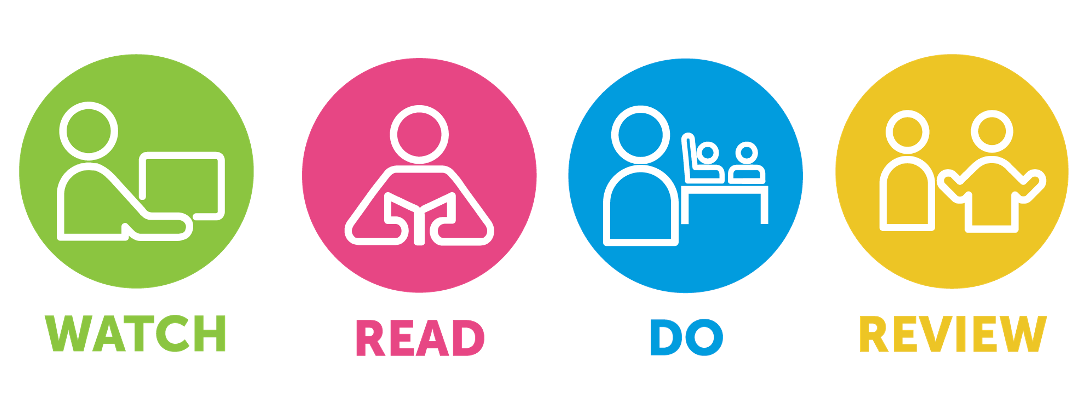
DoPractical, actionable steps to implement immediately in the classroom.
ReviewBuilt-in reflection to cement the learning.
Target audience: universally applicable across all educational tiers — early-career teachers, SEN-focused specialists, and senior leadership teams driving systemic change.
Globally recognized as the pioneering authority and "mother of differentiation." Her work focuses on structured, empathetic pedagogical design that honors student differences.
Founder of Inclusion Expert and a leading strategic advisor to the UN, EU, and the UK Department for Education, specializing in identifying systemic institutional barriers.
A prominent authority on inclusion and formative lesson design who has systematically supported numerous schools and municipalities across Scandinavia.
Five learning modules with focused units — expand each module to explore the syllabus and learning outcomes.
Learning Module 1Module 1: Introduction – Welcome to the Global Inclusive Teaching Initiative
Unit A: Introduction from the Authors
An introduction to the Global Inclusive Teaching Initiative presented by Daniel Sobel, Prof. Carol Ann Tomlinson, and Helena Wallberg. They each explain their rationale for being part of this initiative, how it will benefit you, and how you are supporting UN Sustainable Development Goal 4 (SDG4) and UNESCO.
Unit B: Contents and User Guide
How to navigate your way through the programme with a detailed content and user guide.
Unit C: A Literature Review Lecture
The research and rationale behind the Global Inclusive Teaching Initiative. Written and presented by Daniel Sobel, this unit takes a deep dive into the literature supporting and exploring inclusion in education.
Learning Module 2Module 2: Structures That Support Differentiation
Unit A: How to Pre-Empt the Five Most Common Fault Lines of the Average Lesson (Daniel Sobel)
Students will:
Identify the five key areas of the average lesson which can lead to difficulties for children who are vulnerable or who have additional learning needs.
Learn ways to minimise these difficulties through preparation and understanding of students' needs.
Unit B: Lesson Structure with Differentiated Activities (8 Phases of the Lesson) (Helena Wallberg)
Students will:
Understand the difference between lesson plan and lesson design.
Be able to create eight-part structures with a focus on understanding how students think, work, learn and perform.
Learning Module 3Module 3: Differentiation of Pedagogy and Teaching Skills
Unit A: Communicating Effectively (Prof. Carol Ann Tomlinson)
Students will:
Understand the importance of effective communication.
Learn how to communicate effectively with pupils.
Unit B: Framing – Framing Units and Lessons (Prof. Carol Ann Tomlinson)
Students will:
Understand how the process of "framing" enables students to navigate their way through the lesson with confidence.
Be able to devise ways to implement this process in their own practice.
Unit C: Effective Questioning in the Classroom (Prof. Carol Ann Tomlinson)
Students will:
Improve their questioning skills, and how to use open and closed questions to enrich the learning experience for both the teacher and pupil.
Unit D: Differentiated Assessments of Learning (Helena Wallberg)
Students will:
Build an understanding of "learning goals".
Develop strategies to use "learning goals" effectively in the classroom to improve the students' learning experience.
Unit E: How to Give Highly Effective Differentiated Feedback (Helena Wallberg)
Students will:
Be able to deliver differentiated feedback so that it is an effective part of the teaching and learning process.
Learning Module 4Module 4: Common Specific Issues
Unit A: How to Navigate the Digital World (Helena Wallberg)
Students will:
Be able to make effective use of technology in a safe and productive manner.
Learning Module 5Module 5: The Conceptual and Practical Foundations of Inclusive Teaching
Unit A: Creating an Optimal Learning Environment (Daniel Sobel)
Students will:
Understand the importance of creating a welcoming learning environment matched to students' individual needs.
Learn strategies to build an optimal learning environment where students can succeed.
Unit B: Building on Children's Strengths (Prof. Carol Ann Tomlinson)
Students will:
Develop their understanding of the value in recognising students' strengths.
Be able to use observations and reflections to plan different approaches to building on students' strengths in the classroom.
Meet the authors — global inclusion experts
Prof. Carol Ann Tomlinson (USA)
Carol is William Clay Parrish, Jr. Professor Emeritus at the University of Virginia's School of Education and Human Development where she served as Chair of Educational Leadership, Foundations, and Policy, and Co-Director of the University's Institutes on Academic Diversity. Prior to joining the faculty at UVa, she was a teacher in public schools for 21 years, during which she taught students in high school, preschool, and middle school and also administered programmes for struggling and advanced learners. Carol is author of over 300 books, book chapters, articles, and other educational materials; her books on differentiation are available in 14 languages. In 2021, she was ranked #16 in the Education Week Edu-Scholar Public Presence Rankings of the 200 "University-based academics who are contributing most substantially to public debates about schools and schooling", and as the #4 voice in Educational Psychology. She works throughout the United States and internationally with educators who seek to create classrooms that are more effective with academically diverse student populations.
There are times in life that are equivalent to a Mega-Millions Lottery win, accidentally happening upon a super pod of Dolphins, running into a friend from high school when you are lost in Barcelona. Being able to work with you this year has been that for me. You are a brilliant professional whose insights have been a central guidepost and inspiration to my work.
I just wanted you to know that in the dark times that this pandemic has produced, you have been my beacon of hope.
I am forever grateful to have been one of your students and have taken your lessons with me throughout the many places and adventures of my life.
Daniel Sobel (UK)
Daniel is a global leader in inclusion. He is a highly-regarded speaker at national and international conferences, and has advised the UK Government and international organisations such as the European Union and the United Nations. As the founder of Inclusion Expert, one of the UK's most respected education organisations, he and his team have supported thousands of schools to become truly inclusive and hundreds of teachers to complete post-graduate programmes. He has written three best-selling books (Bloomsbury Press), and has written over 80 articles in publications around the world, a series for the Guardian on Inclusive Schools and regular columns in Headteacher Update and SecEd. He shares his thoughts on education and Inclusion with his 30,000 LinkedIn followers. In 2020, he established the International Forums of Inclusion Practitioners (IFIP).
Working with Daniel is one of the few times in my career that I've not only had a lightbulb moment but an experience that changed my perceptions of learning forever
His work challenges educators and policymakers alike to accept learners' diversity as a gift to teaching and learning
His work is thoughtful, well-researched, innovative, and meaningful. It challenges education thinking at the highest level
Helena Wallberg (Sweden)
Helena has 22 years' experience of teaching high school English, French and Pedagogy. Formerly with the Swedish National Board of Education, she is now a teacher trainer and an inclusion consultant. Helena has authored several books on assessment, feedback and lesson design, specifically about explicit and differentiated instruction as tools to engage all learners. She writes articles and booklets that are distributed across Sweden for teacher learning communities, a concept about which she is passionate. Helena works with teacher groups of all kinds to develop their ability to meet all students in practice.
Lesson design is a highly topical, creative and thought-provoking book
Have just read Lesson Design by Helena Wallberg and am really inspired. Exciting and inspiring
Wallberg succeeds in putting into words the silent knowledge that experienced teachers have about how they plan and carry out their lessons in a simple way
GITI access is quoted bespoke for your school size, user numbers, and location. Register your interest by email — online checkout is not available on this site yet.
 IFIP



 Learning Module 1
Module 1: Introduction – Welcome to the Global Inclusive Teaching Initiative
 Learning Module 2
Module 2: Structures That Support Differentiation
 Learning Module 3
Module 3: Differentiation of Pedagogy and Teaching Skills
 Learning Module 4
Module 4: Common Specific Issues
 Learning Module 5
Module 5: The Conceptual and Practical Foundations of Inclusive Teaching